Easy Homemade Sauerkraut Recipe
Learn how to make traditional homemade sauerkraut with just two simple ingredients: cabbage and salt. This naturally fermented food is packed with probiotics, easy to make, and a delicious way to preserve fresh cabbage for months.
Whether you’re new to fermentation or have been making sauerkraut for years, this simple method produces crunchy, tangy sauerkraut every time.
This post contains affiliate links, which means I make a small commission at no extra cost to you. As an Amazon Associate I earn from qualifying purchases. Please read our Disclosure Policy.
Jump to RecipeWhy We Love Homemade Sauerkraut
Sauerkraut is one of the easiest fermented foods to make at home. It requires no special equipment, no vinegar, and no canning. Just cabbage, salt, and a little patience.
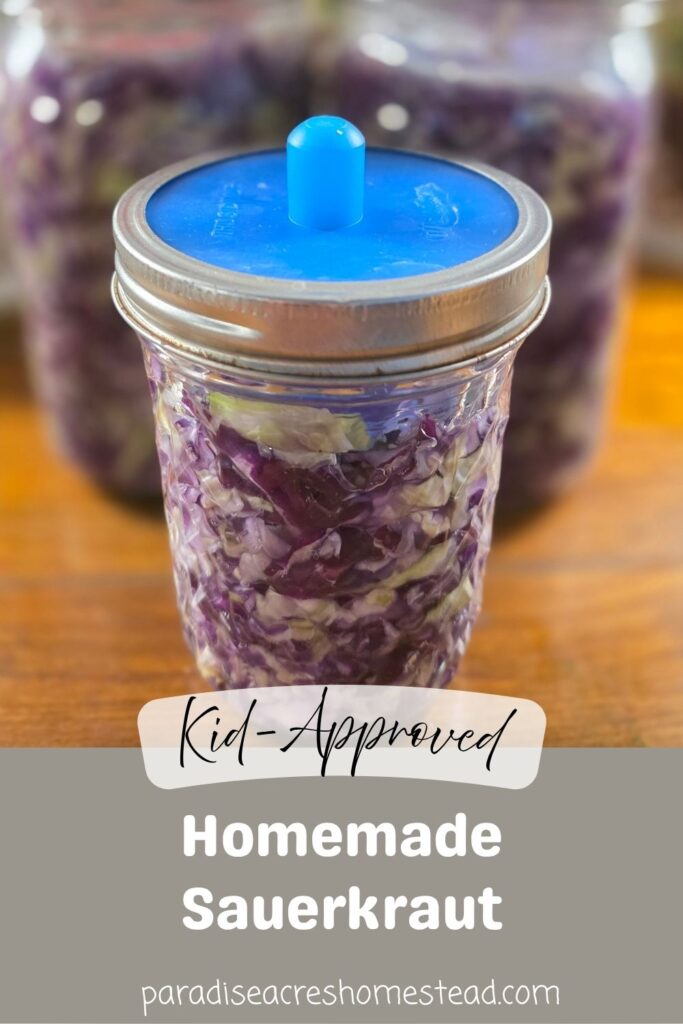
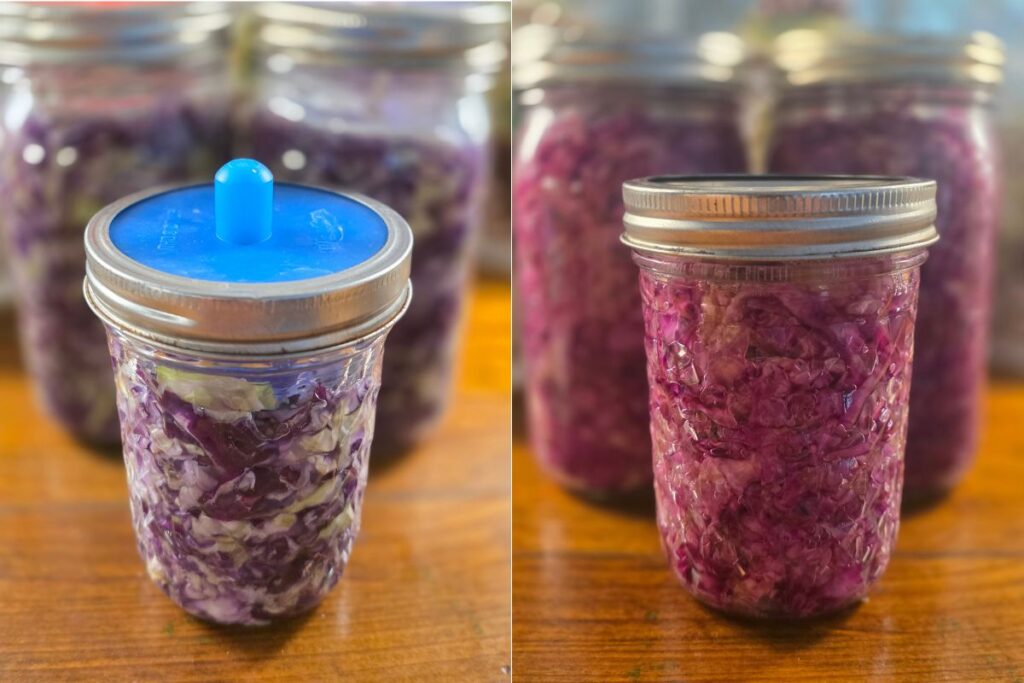
We keep sauerkraut in our refrigerator year-round and serve it alongside soups, roasted meats, eggs, and sandwiches. My kids especially love when I make it with a mix of red and green cabbage because it turns the prettiest bright pink-purple color!
Not only is homemade sauerkraut delicious, but it’s also a great way to add beneficial probiotics to your diet.
Ingredients
- 5 pounds cabbage – about 3 heads (green, red, or a combination)
- 3 tablespoons Himalayan salt – or sea salt
The 2% Salt Rule
For successful fermentation, I follow the simple 2% salt rule. To help with accuracy, weigh your shredded cabbage in grams and multiply by 0.02 to get the exact amount of salt needed in grams.
For every 5 pounds of cabbage, use approximately 3 tablespoons salt.
I typically use Himalayan salt, but any high-quality sea salt works well. Avoid iodized table salt, which can interfere with fermentation.
Equipment Needed
- Large mixing bowl
- Sharp knife
- Food processor
- Glass jar or fermentation crock
- Fermentation weight & lid kit
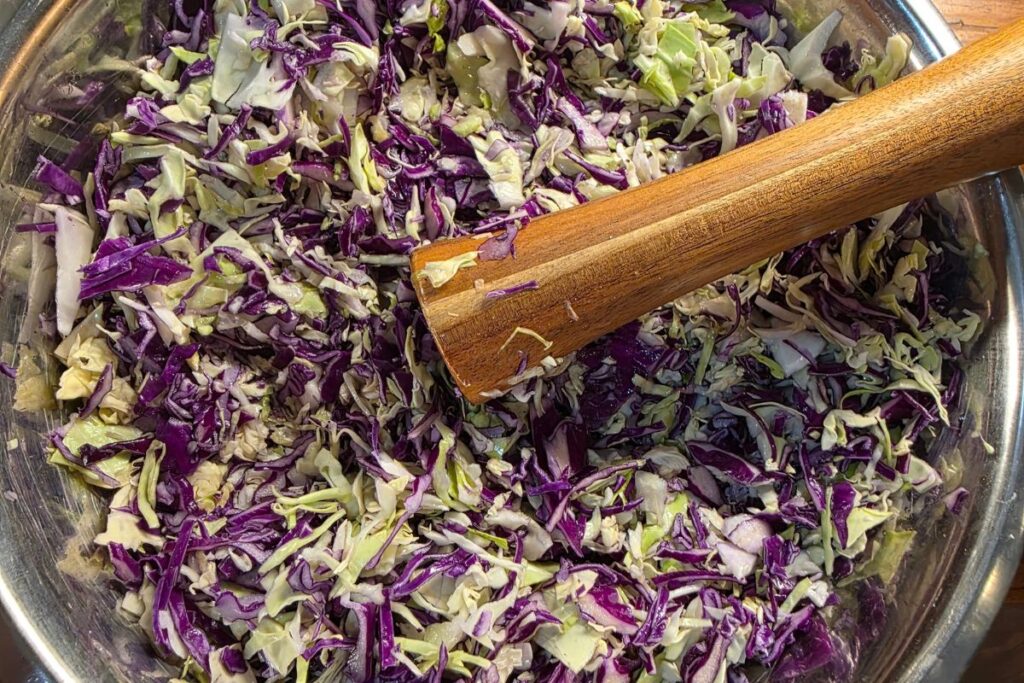
A mix of red and green cabbage makes such a beautiful sauerkraut!
How to Make Sauerkraut
Step 1: Prepare the Cabbage
Remove any damaged outer leaves from the cabbage.
Cut the cabbage into chunks and remove the core.
I like to use my Ninja blender to quickly chop the cabbage into small pieces. It saves a ton of time compared to slicing by hand.
If using both red and green cabbage, simply combine them.
Step 2: Weigh and Salt
Place the chopped cabbage into a large bowl.
Sprinkle the salt evenly over the cabbage.
For 5 pounds of cabbage, use 3 tablespoons of salt.
Let it rest 5-15 minutes. Giving it a rest time after salting shortens the amount of massaging it takes to get a brine.

Step 3: Massage the Cabbage
Using clean hands, massage the cabbage for 5-10 minutes. You’ll notice it beginning to soften and release liquid.
Step 4: Pack Into Jars
Transfer the cabbage and all of the liquid into a clean fermentation jar.
Press the cabbage down firmly as you go to remove air pockets. The tamper from this fermentation kit is very helpful to pack it down.
The brine should rise above the cabbage.

Step 5: Add Fermentation Weights
Place a fermentation weight on top of the cabbage to keep everything submerged beneath the brine.
This is one of the most important steps because exposed cabbage can develop mold.
Step 6: Cover and Ferment
Attach your fermentation lid and place the jar at room temperature, out of direct sunlight.
Allow the sauerkraut to ferment for:
- 5-7 days for a mild flavor
- 2-4 weeks for a stronger, tangier flavor
We usually enjoy ours around the 1-week mark, but fermentation is very much a matter of personal preference.
Step 7: Refrigerate
Once the sauerkraut reaches your desired flavor, remove the fermentation lid and store it in the refrigerator.
The cool temperature slows fermentation and helps preserve the flavor and texture.
How Do You Know When Sauerkraut Is Ready?
Your sauerkraut is ready when:
- It smells pleasantly sour and tangy
- The cabbage has softened slightly
- It tastes the way you like it
There’s no exact timeline because fermentation speed depends on your home’s temperature.
The best method is simply to taste it every few days.
Troubleshooting
My cabbage isn’t producing enough liquid.
Continue massaging longer. If needed, let it sit for 15-20 minutes after salting, then massage again.
Is white film normal?
A thin white film (kahm yeast) can sometimes develop and is generally harmless.
What if mold forms?
If you see fuzzy mold, especially colored mold, discard the batch and start over.
Keeping the cabbage submerged beneath the brine greatly reduces the risk.
Ways We Eat Homemade Sauerkraut
We enjoy sauerkraut in so many meals throughout the year.
Some of our favorites include:
- Added to soup bowls before serving
- Alongside roasted beef or chicken
- Mixed into scrambled eggs
- On sandwiches and burgers
- As a simple probiotic-rich side dish
Try it with these family favorites:
- Creamy Beef Vegetable Soup
- Green Chicken Enchilada Soup
- Healthy Flaxseed Turkey Burgers
- Easy Creamy Lasagna Recipe
Frequently Asked Questions
Can I use red cabbage?
Absolutely! Red cabbage makes beautiful pink-purple sauerkraut that kids often find especially fun to eat.
Do I need special fermentation equipment?
No, but fermentation weights and lids make the process much easier and help prevent mold.
How long does homemade sauerkraut last?
When stored in the refrigerator, homemade sauerkraut can last several months.
Can I add other vegetables?
Yes! Carrots, garlic, onions, and herbs can all be added for different flavor combinations.

Final Thoughts
Making sauerkraut at home is one of the simplest ways to preserve fresh vegetables and add naturally fermented foods to your family’s meals.
With just cabbage, salt, and a little patience, you’ll have delicious homemade sauerkraut that’s packed with flavor and beneficial probiotics. Regular consumption of fermented foods have been shown to have many health benefits, including improved digestion, increased immunity, and reduced inflammation.
If you’re new to fermentation, don’t overthink it. Start with one batch, taste as it ferments, and soon you’ll be making sauerkraut on repeat just like we do.

Easy Homemade Sauerkraut Recipe
Equipment
- 1 fermentation kit
- 1 food processor
Ingredients
- 5 lb cabbage (about 3 heads) green or red
- 3 tbsp salt
Instructions
Prepare the Cabbage
- Remove any damaged outer leaves from the cabbage.
- Cut the cabbage into chunks and remove the core.
- I like to use my Ninja blender to quickly chop the cabbage into small pieces. It saves a ton of time compared to slicing by hand.
- If using both red and green cabbage, simply combine them.
Weigh and Salt
- Place the chopped cabbage into a large bowl.
- Sprinkle the salt evenly over the cabbage.
- For 5 pounds of cabbage, use 3 tablespoons of salt.
- Let it rest 5-15 minutes. Giving it a rest time after salting shortens the amount of massaging it takes to get a brine.
Massage the Cabbage
- Using clean hands, massage the cabbage for 5-10 minutes. You’ll notice it beginning to soften and release liquid.
Pack Into Jars
- Transfer the cabbage and all of the liquid into a clean fermentation jar.
- Press the cabbage down firmly as you go to remove air pockets. The tamper from this fermentation kit is very helpful to pack it down.
- The brine should rise above the cabbage.
Add Fermentation Weights
- Place a fermentation weight on top of the cabbage to keep everything submerged beneath the brine.
- This is one of the most important steps because exposed cabbage can develop mold.
Cover and Ferment
- Attach your fermentation lid and place the jar at room temperature, out of direct sunlight.
- Allow the sauerkraut to ferment for:
- 5-7 days for a mild flavor
- 2-4 weeks for a stronger, tangier flavor
- We usually enjoy ours around the 1-week mark, but fermentation is very much a matter of personal preference.
Refrigerate
- Once the sauerkraut reaches your desired flavor, remove the fermentation lid and store it in the refrigerator.
- The cool temperature slows fermentation and helps preserve the flavor and texture.
Notes
- It smells pleasantly sour and tangy
- The cabbage has softened slightly
- It tastes the way you like it
Did you make this?
If you loved this recipe, please leave a rating and review below. Your support truly means so much to me. Also, be sure to follow us on Pinterest for more delicious and nourishing recipes.